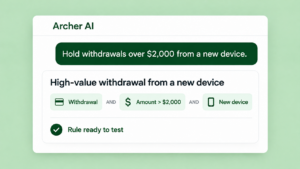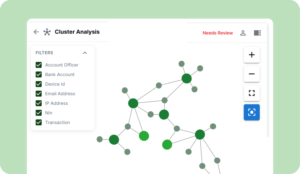
Rules decay over time. False positives pile up. And most teams don’t find out until customers complain.
In fact, most fintechs can’t tell you which of their fraud rules are actually working.
Archer’s AI agent finds the rules that stopped working, explains why, and fixes them in one session.
The problem nobody checks
Every fintech has fraud rules. Most of them were built at launch, updated when a new product shipped or a new regulation dropped, and left alone in between.
That’s how rule decay starts.
Over time, fraudsters change tactics. Customer behavior shifts. New products create new surfaces. But the rules keep running as they were.
And many times the fraud rules were not precise to begin with.
The result is a growing pile of alerts, and no clear way to tell which ones are catching real fraud and which ones are noise.
The problem isn’t that teams don’t care. It’s that they don’t have a precise way to check.
When we talk to compliance and risk leads, the answer to “how do you know if your rules are working?” is almost always the same: gut feel. If alert volume goes up, something feels off. But whether that means the rules are too broad, too narrow, or just right for a threat that moved on, there’s no fast way to tell.
So teams adapt. They start ignoring alerts, or spending less time on each one. The intuition to spot a bad rule only develops over months or years of watching the queue. And by then, the damage from false positives (blocked customers, delayed transactions, lost revenue) has been compounding quietly.
What “low precision” actually means
In plain terms: lots of alerts firing, but only some of them are catching actual fraud, money laundering, or stolen funds. Or for a lender, legitimate loan applications getting flagged and delayed while real risk slips through. The rest are false positives, real customers getting flagged for legitimate activity. Every false positive is a customer blocked, a transaction delayed, and a support ticket created.
Most teams don’t know their false positive rate. They know the alert volume feels high. That’s not the same thing.
Here’s how Archer’s AI agent finds and fixes rules in minutes
We built Archer’s AI agent to work across your alert history, rule performance data, and investigation outcomes. It doesn’t just surface numbers. It tells you what’s wrong, why, and what to do about it.
Here’s what a session looks like.
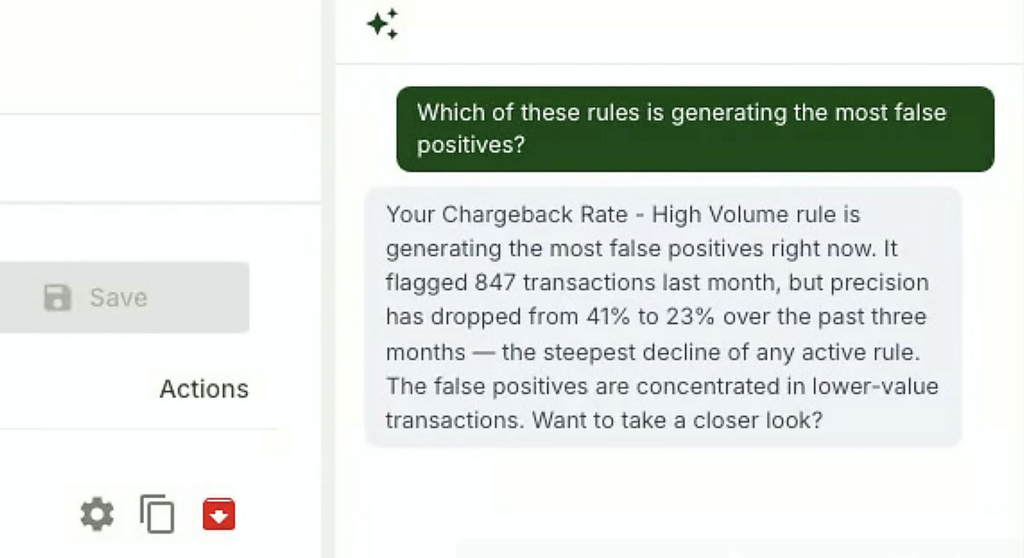
“Which of these rules is generating the most false positives?”
You open the rules engine and ask. The agent works across your full rule set and identifies the chargeback rule as the worst performer. It doesn’t just rank them. It explains why: where the false positives are concentrated, what changed in the underlying data, and why the rule’s conditions no longer match the current threat pattern.
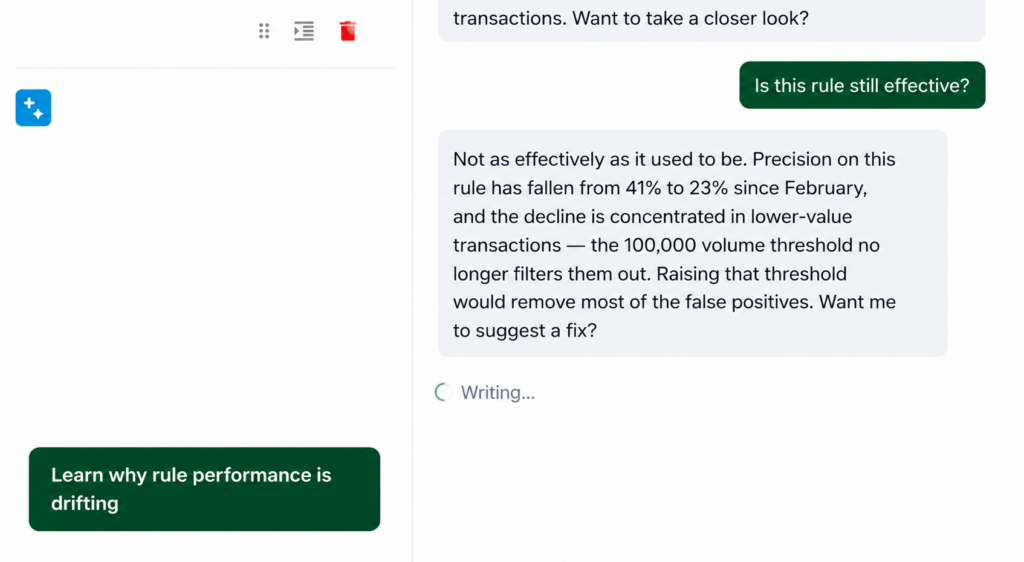
“Is this rule still effective?”
You click into the chargeback rule and ask. The agent gives you the performance data: precision has dropped, false positives are concentrated in specific transaction patterns, and the conditions that made sense at launch no longer reflect how customers actually use the product. This is the diagnosis most teams never get. Not just “this rule is bad,” but specifically what changed and where.
The agent proposes and backtests fixes to your rule.
Once it understands why the rule is underperforming, the agent suggests specific changes to the rule’s conditions. Each suggestion comes with a backtest showing the projected impact: how many false positives would drop, whether detection holds up, and what the tradeoffs are. You’re comparing options with real data, not guessing.
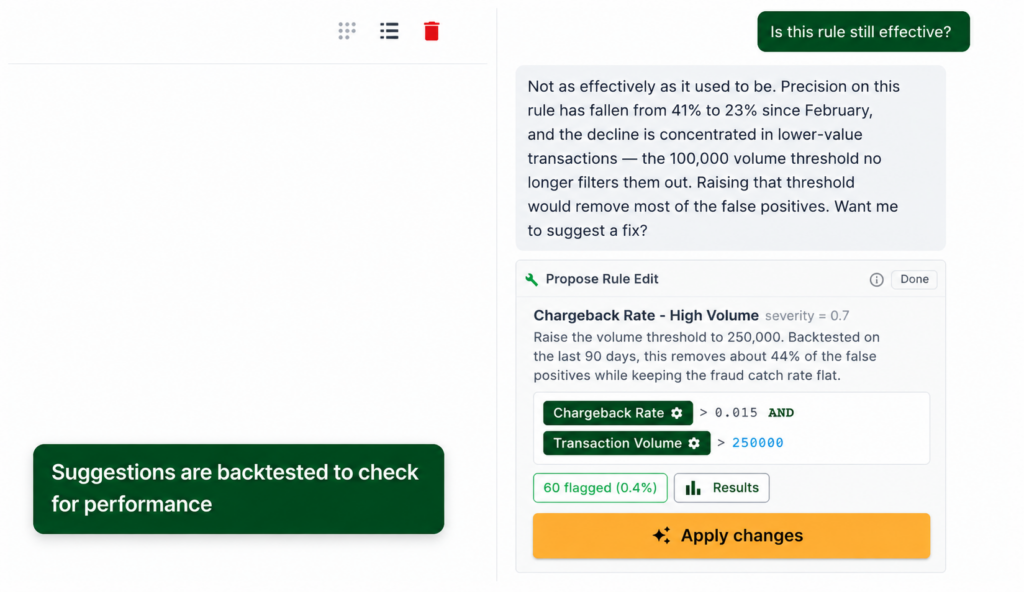
Apply rule changes in one click.
If the fix looks right, you click “Apply.” The rule conditions update. New backtest results confirm the improvement. And the agent tracks the change, so the next time you ask, it can compare how the old version and the new version performed over time.
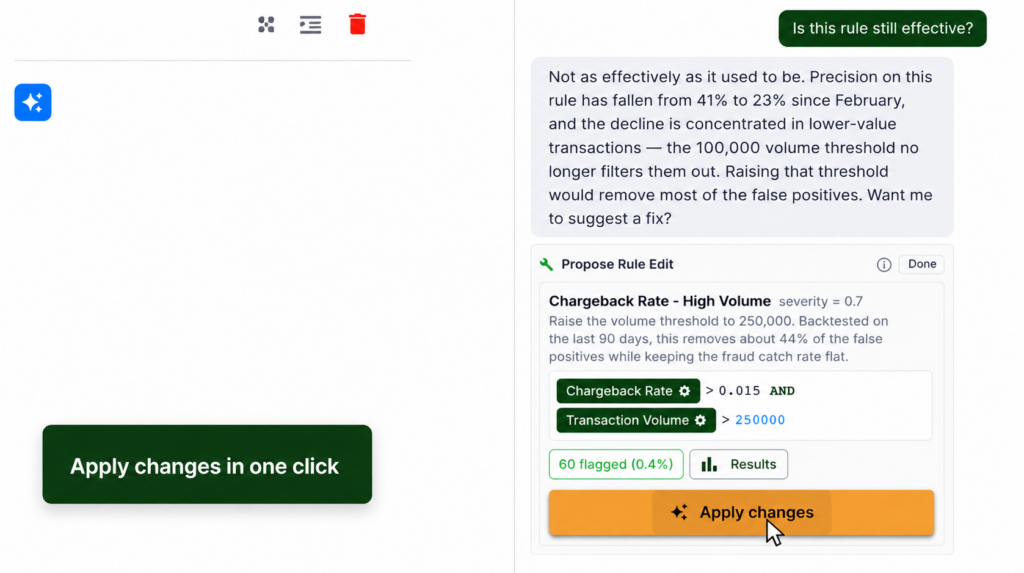
One session: find the problem across all your rules, understand why it’s happening, fix it right there.
The compliance team runs their own rules. No engineering tickets.
Every rule adjustment happens through Archer, informed by data. The compliance team gets their questions answered, finds gaps, and optimizes rules without filing engineering tickets. No product manager explaining how to configure the rule engine. No developer sprint time allocated to compliance requests.
For the technical team, this is a structural shift: the risk and compliance function operates independently on rule management, using the same platform where the rules run. The questions and data requests that used to flow through engineering now get answered by the agent, in seconds.
Fewer false positives on day one. No engineering tickets by week three.
Day one: The compliance lead knows which rules are underperforming and why. The worst ones are already fixed, backtested, and live. No tickets filed, no sprint time requested.
After a few weeks: The company starts to notice. False positive rates are down. Customer complaints from blocked transactions drop. The compliance team is making rule changes on their own, informed by data, without pulling in engineering or product. Rule performance stops being something one person carries in their head and becomes something the whole team can see.
Rule decay has always existed. Now there’s an agent that fixes it.
Our cofounder and CTO Fran saw this firsthand as a machine learning data scientist at Amazon. Rule decay is universal across every fraud and compliance operation. What’s changed is that recent advances in AI made it possible to build an agent that finds the decay, explains it, and fixes it in the same session.
If you’re running fraud or compliance rules today and you don’t know your false positive rate, that’s where to start.
We’ll walk you through it live.
Talk to us: archer@archerprotect.com