
Company verification in Nigeria is no longer just a compliance requirement. In 2026, it has become a core element of cybersecurity, fraud prevention and regulatory alignment. As digital transactions increase across fintech, lending, e-commerce and financial services, the risks associated with onboarding unverified or fraudulent entities have grown significantly.
At the center of company verification in Nigeria is CAC, the Corporate Affairs Commission. While many businesses view CAC registration as an administrative formality, it is in fact the first structural layer of business security. Before data is exchanged, before transactions are processed and before partnerships are formed, the company’s legitimacy itself must be established.
This is where modern risk management begins.
The role of CAC in company verification in Nigeria
The Corporate Affairs Commission is responsible for registering businesses and maintaining official records of companies operating in Nigeria. Through CAC registration and the CAC portal, businesses obtain legal recognition. Without registration, an entity does not legally exist.
However, verification goes beyond confirming existence. CAC public search allows organizations to validate company names, RC numbers, directors and registration status. When performing CAC public search by RC number, compliance teams can detect inconsistencies between declared information and official records. These inconsistencies often signal fake details, shell entities or misrepresentation.
In high-risk sectors such as fintech and digital lending, failure to conduct proper company verification can expose platforms to fraud schemes involving clone card activity, chargeback abuse or structured dispute transactions.
Company verification is therefore not separate from cybersecurity. It is one of its earliest stages.
Why company verification matters for cybersecurity in Nigeria
When people ask what cybersecurity is, the answer typically focuses on protecting computer systems, networks and data from attack. But in practice, many cyber threats originate from trust gaps rather than technical vulnerabilities.
An unverified company can enter a system, pass superficial onboarding checks and later engage in fraudulent activity. Carding operations, money laundering schemes and transaction manipulation often rely on business entities that appear legitimate on the surface.
By integrating CAC verification with KYC verification, TIN verification and source of funds analysis, organizations reduce exposure before cyber threats materialize. This aligns with modern computer security principles, where prevention and early validation are more effective than post-incident response.
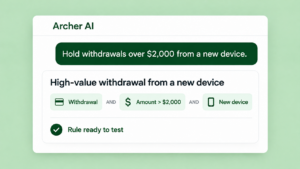
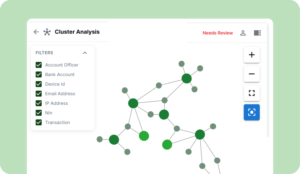
Archer strengthens this process by connecting verification data to broader risk signals. Instead of treating CAC data as static information, Archer enables security analysts to correlate registration details with behavioral data, transaction patterns and identity checks.
Regulatory context: data protection and compliance in Nigeria
Company verification also intersects with regulatory requirements. The Nigeria Data Protection Act and oversight by the Nigeria Data Protection Commission reinforce the importance of responsible data handling. NDPR compliance and broader data protection laws in Nigeria require organizations to process and verify information securely.
In addition, the Money Laundering Act 2022 increases scrutiny on due diligence practices. Organizations must understand not only who their customers are, but also the legal and operational status of the businesses they engage with.
Failure to verify companies properly can result in regulatory exposure, financial loss and reputational damage. Proper CAC registration checks, TIN verification through FIRS TIN verification processes and confirmation of proof of address strengthen compliance frameworks.
Archer supports organizations in aligning company verification workflows with these regulatory expectations, ensuring that compliance is embedded into operational security rather than handled separately.
The operational challenge: from verification to continuous monitoring
One of the biggest weaknesses in company verification in Nigeria is treating it as a one-time event. A business may pass CAC registration checks at onboarding but later change ownership structures, operational behavior or risk profile.
In a dynamic digital economy, verification must evolve into continuous monitoring. Security analysts, cybersecurity engineers and compliance teams need tools that connect CAC data, transaction patterns and anomaly detection within a unified framework.
Archer acts as the operational layer that bridges compliance data and cybersecurity tools. It allows teams to contextualize CAC portal information, integrate KYC workflows and detect emerging threats before they escalate into large-scale fraud.
This shift from static verification to adaptive risk management is essential in sectors such as fintech, microfinance and digital lending, where transaction velocity increases exposure.
Company verification as a strategic advantage
Strong company verification processes do more than reduce fraud. They build trust within Nigeria’s digital economy. Platforms that demonstrate robust CAC validation, regulatory alignment and proactive cybersecurity posture are more attractive to partners, investors and customers.
As digital transformation accelerates, organizations that treat CAC verification as the foundation of business security rather than a bureaucratic task gain a measurable advantage.
Archer helps transform company verification in Nigeria from a checkbox exercise into a strategic security capability. By connecting entity validation, KYC, data intelligence and transaction monitoring, Archer empowers teams to move from reactive fraud management to proactive risk prevention.