
The growth of small and medium enterprises in Nigeria is closely linked to the work of Small and Medium Enterprises Development Agency of Nigeria. SMEDAN plays a central role in supporting business formalization, CAC registration, access to funding and regulatory alignment. However, as more SMEs digitize their operations and integrate fintech services, cyber security has become a structural requirement rather than a technical afterthought.
In 2026, the question is no longer what is cyber security, but how cyber security frameworks protect SME data, ensure KYC compliance and reduce fraud exposure across Nigeria’s expanding digital economy.
The digital expansion of SMEs and the data risk landscape
SMEs supported by SMEDAN increasingly rely on digital platforms for registration, payments, tax filing and customer onboarding. This digital shift expands the surface area for cyber threats. Data flows between CAC portals, fintech platforms, internal accounting systems and government databases create interconnected vulnerabilities.
Understanding what is data in this context is essential. Data includes business registration details, proof of address documentation, TIN verification records and sensitive financial information. When improperly secured, this data becomes a target for fraud schemes such as fake details manipulation, carding and identity theft.
Cybersecurity in Nigeria must therefore move beyond perimeter defenses. It must integrate computer security practices with entity verification and transaction monitoring. For SMEs, weak cyber security controls can lead to reputational damage, financial losses and regulatory penalties under the Nigeria Data Protection Act.
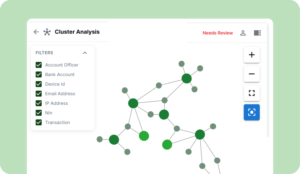
Archer strengthens this ecosystem by enabling structured verification processes that connect company records, transaction behavior and compliance indicators into a unified risk model.
CAC registration, SMEDAN and verification exposure
SMEDAN works closely with businesses that must formalize through the Corporate Affairs Commission. High-volume search terms such as cac registration, cac login, cac public search and cac name search demonstrate how frequently Nigerian entrepreneurs interact with corporate records.
However, fraudsters also exploit this ecosystem. Shell entities can be created through legitimate CAC registration processes and later used for chargeback abuse, loan fraud or fintech onboarding manipulation. Without continuous monitoring, CAC data alone does not guarantee legitimacy.
Public search CAC tools allow basic verification, including cac public search by rc number. Yet SMEs often lack structured cyber security tools to analyze deeper inconsistencies between declared business activities and transactional behavior.
Archer enhances company verification by cross-referencing CAC records with behavioral signals, transaction data and compliance checks. This reduces the risk that newly registered entities exploit system gaps before detection.
KYC, TIN verification and compliance pressure
KYC remains one of the most critical components of SME risk management. High keyword difficulty around kyc and kyc verification reflects its regulatory importance. Many SME founders still ask what is kyc verification or what is computer security, demonstrating ongoing knowledge gaps.
SMEs interacting with lenders, fintech companies in Nigeria and digital marketplaces must complete TIN verification and, in some cases, FIRS TIN verification. These processes link business identity to tax records and financial activity. Weak verification exposes the ecosystem to money laundering risks and violations of the Money Laundering Act 2022.
Additionally, compliance with the Nigeria Data Protection Commission and data protection laws in Nigeria requires responsible handling of customer and employee data. The Nigeria Data Protection Act increases accountability for organizations processing personal data, including SMEs.
Archer integrates KYC verification workflows, source of funds meaning analysis and documentation validation into a structured framework that reduces compliance risk while strengthening cyber security posture.
Fraud patterns affecting SME ecosystems
SMEs supported by SMEDAN are not immune to advanced fraud schemes. Carding attacks exploit CVV meaning misunderstandings and poor payment security practices. Clone card incidents affect merchants with insufficient transaction monitoring. Dispute transaction abuse and chargeback manipulation impact SMEs operating in e-commerce and digital services.
The 4 elements of frauds: pressure, opportunity, rationalization and capability, are amplified when SMEs lack dedicated cyber security analysts or cyber security engineers. Many smaller organizations do not deploy professional cyber security tools, relying instead on fragmented protections.
Archer provides SMEs and ecosystem coordinators with scalable cyber security capabilities. By correlating data anomalies, transaction signals and registration inconsistencies, Archer helps reduce exposure to both internal and external threats.
Why SMEDAN must prioritize cyber security education
As a national development agency, SMEDAN’s influence extends beyond business support into ecosystem standards. Cyber security certifications, structured awareness campaigns and guidance on types of cyber security practices can significantly improve SME resilience.
SMEDAN-supported enterprises represent a large portion of Nigeria’s formalizing economy. If these businesses embed cyber security and computer security standards early, systemic risk across fintech and lending sectors decreases.
Archer can support this transformation by providing frameworks tailored for SME environments. Rather than treating cyber security as a high-cost enterprise function, Archer enables scalable verification, monitoring and compliance processes aligned with SME operational realities.
In 2026, SME growth without cyber security integration is unsustainable. Sustainable expansion requires trusted data, verified identities and continuous monitoring across CAC, KYC and transaction environments.