
Nigeria’s digital economy continues to expand rapidly across fintech, lending, payments and online services. With this growth comes a parallel increase in fraud sophistication. Fraud patterns are no longer isolated incidents but structured operations that combine identity manipulation, transaction abuse and regulatory gaps.
Understanding these patterns is essential for modern cybersecurity teams, compliance officers and fraud analysts. In 2026, fraud prevention in Nigeria requires more than reactive controls. It demands structured company verification, strong KYC verification processes and intelligent data correlation.
The evolution of carding and clone card activity in Nigeria
Carding remains one of the most visible fraud patterns affecting Nigeria’s digital ecosystem. Stolen card data, including CVV information from ATM cards, is used to conduct unauthorized online transactions. In some cases, clone card operations replicate physical payment instruments, allowing fraudsters to bypass basic controls.
What makes modern carding difficult to detect is that transactions often appear legitimate at first glance. Fraudsters distribute activity across multiple accounts, companies and devices, reducing obvious red flags.
This is where cybersecurity and computer security strategies intersect with company verification. When fraudulent transactions are linked to recently registered entities or businesses with inconsistent CAC data, risk exposure increases significantly.
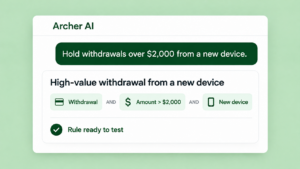
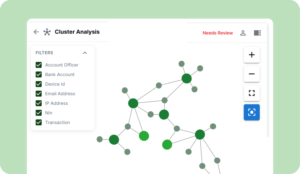
Archer enables teams to connect transaction anomalies with entity-level signals, identifying fraud patterns that would otherwise remain hidden within isolated computer systems.
Fake details and identity layer manipulation
Another recurring fraud pattern in Nigeria involves the use of fake details during onboarding. Fraudsters frequently combine legitimate fragments of data with fabricated elements, creating identities that pass superficial checks.
Phone number verification queries such as check this phone number Nigeria have become common because organizations recognize the importance of validating contact information. However, identity manipulation often goes beyond phone numbers. Fraudulent actors may exploit weak KYC processes, incomplete proof of address verification or insufficient TIN verification procedures.
When company verification through CAC registration and CAC public search is neglected, fraudulent entities gain credibility. These entities may later engage in chargeback abuse, dispute transaction manipulation or structured fraud schemes.
Archer strengthens identity-layer security by correlating KYC verification data, CAC information and behavioral signals, enabling teams to detect inconsistencies before they escalate into financial loss.
Chargebacks, dispute transactions and structured abuse
Chargebacks are often misunderstood as customer protection mechanisms alone. In reality, organized fraud groups use dispute transaction processes to reverse legitimate payments after goods or services have been delivered.
The meaning of dispute transaction becomes more complex in high-volume digital environments. Fraudsters strategically trigger chargebacks across multiple accounts, masking patterns through volume distribution.
When linked to shell companies, newly registered businesses or entities with suspicious CAC records, chargeback abuse becomes easier to identify. Without entity-level verification, however, these connections may never be made.
Archer helps fraud management teams analyze transaction behavior alongside company data, strengthening detection capabilities and reducing losses from coordinated chargeback schemes.
Regulatory pressure and the compliance dimension
Fraud prevention in Nigeria also operates within a regulatory framework shaped by the Nigeria Data Protection Act, oversight from the Nigeria Data Protection Commission and requirements under the Money Laundering Act 2022.
Organizations must align cybersecurity controls with data protection laws in Nigeria, ensuring responsible processing of customer and company data. Failure to implement strong verification processes increases exposure not only to fraud but also to regulatory penalties.
Company verification through the Corporate Affairs Commission, combined with FIRS TIN verification and source of funds analysis, supports compliance while reinforcing cybersecurity.
Archer integrates these compliance elements into operational workflows, allowing risk teams to move beyond checkbox compliance and toward proactive fraud prevention.
From isolated controls to integrated cybersecurity
Many organizations still treat cybersecurity, KYC and company verification as separate domains. In practice, fraud patterns in Nigeria exploit these silos.
Carding exploits weak transaction monitoring. Fake details exploit weak onboarding processes. Chargeback abuse exploits fragmented oversight. The 4 elements of fraud -pressure, opportunity, rationalization and capability- become easier to activate when controls are disconnected.
Archer addresses this fragmentation by integrating entity verification, behavioral analytics and transaction monitoring into a unified risk framework. This approach enables cyber security analysts and security analysts to detect emerging types of threat before they scale.
In Nigeria’s evolving digital landscape, fraud prevention is no longer about responding to incidents. It is about designing systems where fraud struggles to enter in the first place.